

Lease preparation
Streamline your lease preparation
%3bfill-opacity:.38'/%3e%3cpath fill-rule='evenodd' clip-rule='evenodd' d='M29.255 13.678H15.986c-.977 0-1.77.709-1.77 1.583v11.221H25.88c.85 0 1.433.713 1.421 1.423-.008.568.073 1.223.378 1.71.148.236.346.428.613.56.105.05.224.095.361.128h.602c.977 0 1.77-.71 1.77-1.584V15.261c0-.874-.793-1.583-1.77-1.583Zm-2.144 16.625a2.468 2.468 0 0 1-.195-.27c-.429-.684-.509-1.523-.5-2.14.006-.335-.268-.585-.536-.585H14.217v1.411c0 .875.792 1.584 1.769 1.584h11.125Z' fill='%23009EFF' style='fill:color(display-p3 0 .6196 1)%3bfill-opacity:1'/%3e%3crect x='17.755' y='20.011' width='9.731' height='.792' rx='.396' fill='white' style='fill:white%3bfill-opacity:1'/%3e%3crect x='20.409' y='16.844' width='7.077' height='.792' rx='.396' fill='white' style='fill:white%3bfill-opacity:1'/%3e%3crect x='21.294' y='23.178' width='6.192' height='.792' rx='.396' fill='white' style='fill:white%3bfill-opacity:1'/%3e%3crect x='17.755' y='23.178' width='2.654' height='.792' rx='.396' fill='white' style='fill:white%3bfill-opacity:1'/%3e%3cpath fill-rule='evenodd' clip-rule='evenodd' d='M15.693 30.854c-2.684 0-3.833-1.863-4.29-3.032-.186-.476.215-.927.757-.927h13.72c.558 0 .987.482.979 1.004-.019 1.186.323 2.987 2.592 2.878-4.644.162-9.843.076-13.758.076Z' fill='%23009EFF' style='fill:color(display-p3 0 .6196 1)%3bfill-opacity:1'/%3e%3c/svg%3e)
Tenancy management
For a good tenant relationship

Lease termination
End leases legally and smoothly

' fill='%23E9F0FA'/%3e%3crect opacity='.39' width='228.538' height='284.447' rx='10' transform='matrix(-.96315 -.26897 -.26927 .96306 314.707 85.06)' fill='%23E9F0FA'/%3e%3cg filter='url(%23a)'%3e%3crect x='20.234' y='16' width='228.877' height='284.494' rx='10' fill='url(%23b)'/%3e%3c/g%3e%3crect x='55.996' y='138.918' width='154.492' height='3' rx='1.5' fill='%23E9F0FA'/%3e%3crect x='55.996' y='168.918' width='154.492' height='3' rx='1.5' fill='%23E9F0FA'/%3e%3crect x='55.996' y='198.918' width='154.492' height='3' rx='1.5' fill='%23E9F0FA'/%3e%3crect x='91' y='239' width='88' height='3' rx='1.5' fill='%23E9F0FA'/%3e%3cdefs%3e%3clinearGradient id='b' x1='388.584' y1='650.035' x2='42.732' y2='7.248' gradientUnits='userSpaceOnUse'%3e%3cstop stop-color='%23F7FAFF'/%3e%3cstop offset='1' stop-color='white'/%3e%3c/linearGradient%3e%3cfilter id='a' x='.234' y='0' width='268.879' height='324.494' filterUnits='userSpaceOnUse' color-interpolation-filters='sRGB'%3e%3cfeFlood flood-opacity='0' result='BackgroundImageFix'/%3e%3cfeColorMatrix in='SourceAlpha' values='0 0 0 0 0 0 0 0 0 0 0 0 0 0 0 0 0 0 127 0' result='hardAlpha'/%3e%3cfeOffset dy='4'/%3e%3cfeGaussianBlur stdDeviation='10'/%3e%3cfeColorMatrix values='0 0 0 0 0.827604 0 0 0 0 0.876287 0 0 0 0 0.945833 0 0 0 0.47 0'/%3e%3cfeBlend in2='BackgroundImageFix' result='effect1_dropShadow_8355_25104'/%3e%3cfeBlend in='SourceGraphic' in2='effect1_dropShadow_8355_25104' result='shape'/%3e%3c/filter%3e%3c/defs%3e%3c/svg%3e)
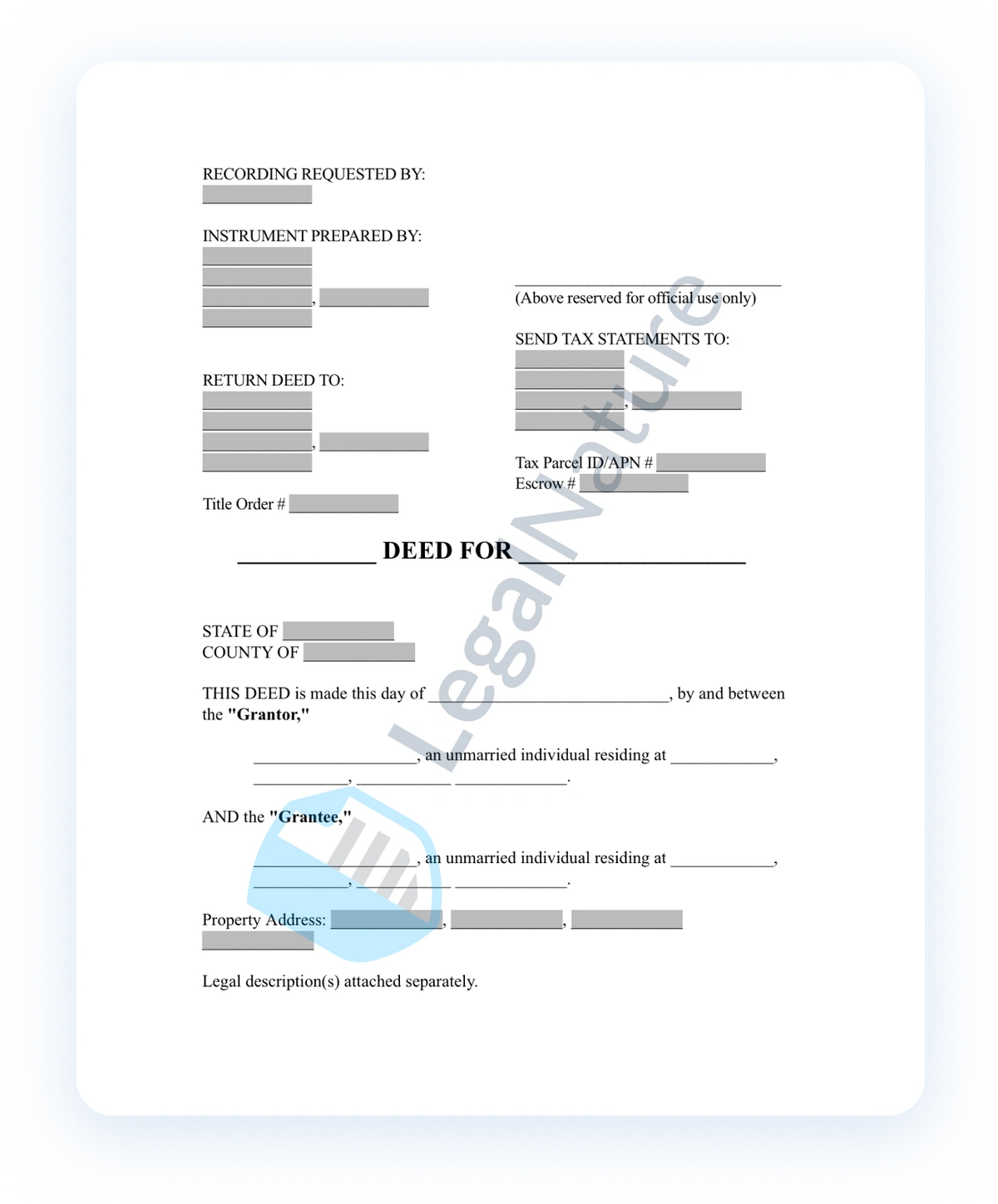
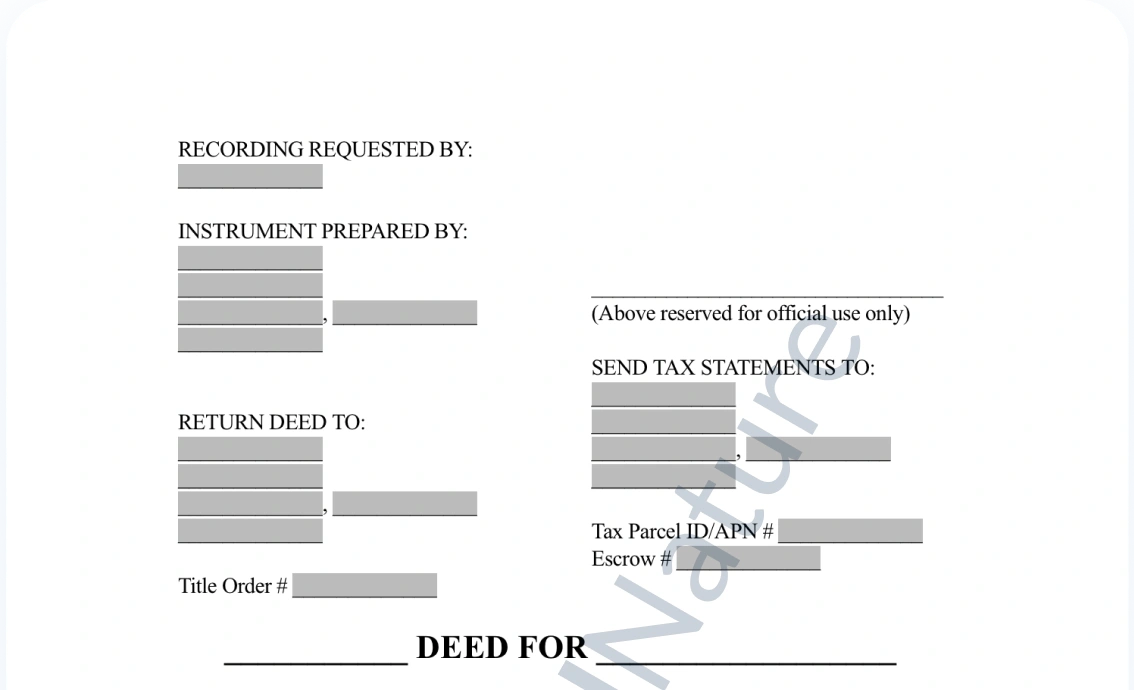
What is a property deed?
A property deed is a legal document that is used in real estate transactions to transfer real property from one person (the grantor) to another (the grantee). Most property deeds will fall into one of the following categories:
- Quit Claim Deed: This deed type is usually used to quickly change ownership on a property title and is commonly used between family members and to transfer property into a trust. Because quit claim deeds do not provide guarantees against title defects, they are usually the quickest and easiest solution for naming new property owners.
- General Warranty Deed: This type of deed guarantees that the property title is free and clear of any liens and other defects (unless stated in the deed) and that the grantor owns proper title to the property. These guarantees make general warranty deeds ideal for property sales.
- Special Warranty Deed: Also known as a "limited warranty deed," this type of deed is similar to a general warranty deed, except that there are no guarantees against any liens and defects that may have occurred prior to the grantor becoming the property owner.
Create the right property deed for your needs
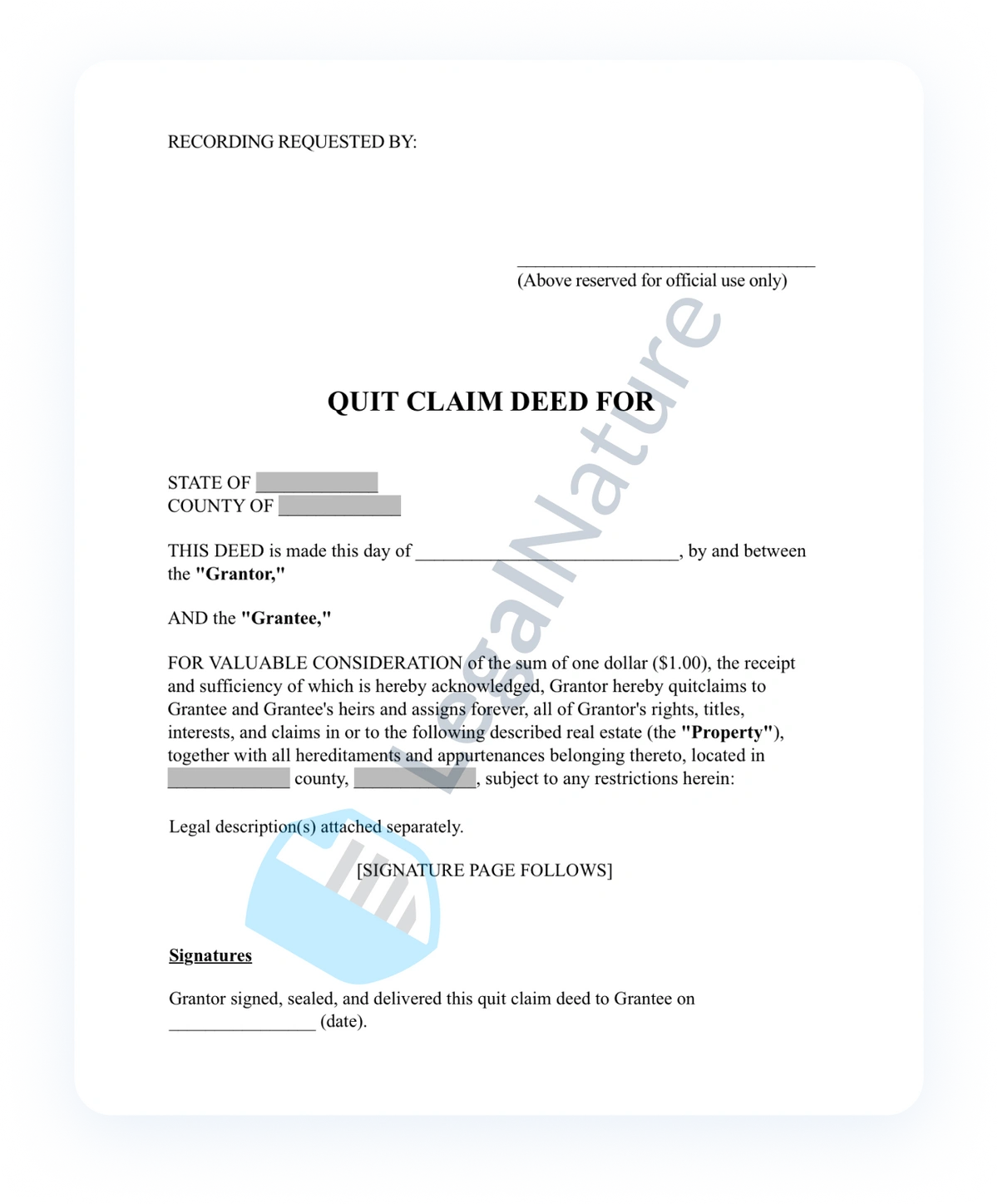
Quit Claim Deed A quit claim deed offers no warranties or assurances regarding the validity of the grantor's interest in the property, but is often the quickest and easiest way to transfer property.
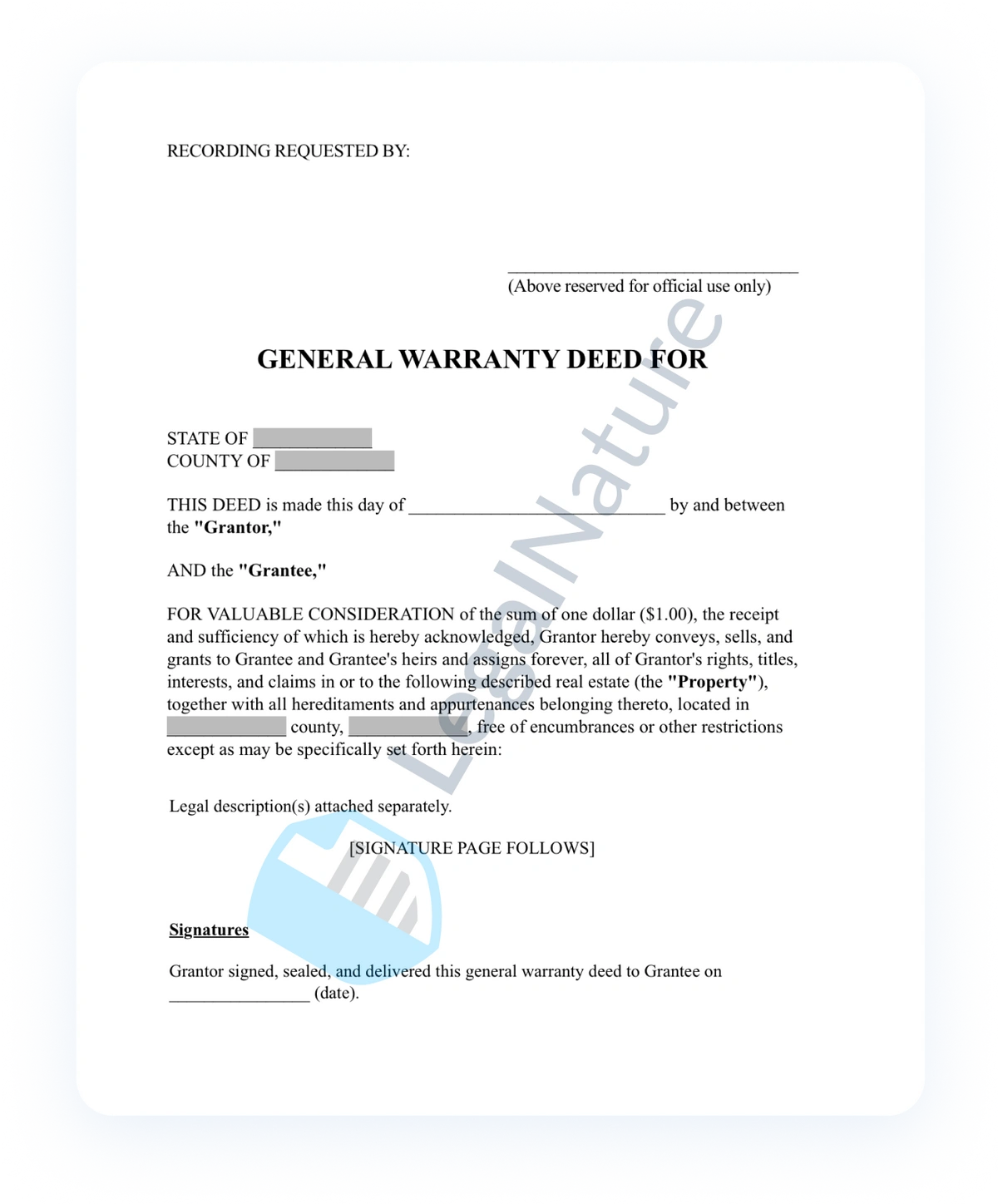
General Warranty Deed This type of deed provides comprehensive guarantees about the property's title and the seller's right to transfer it.
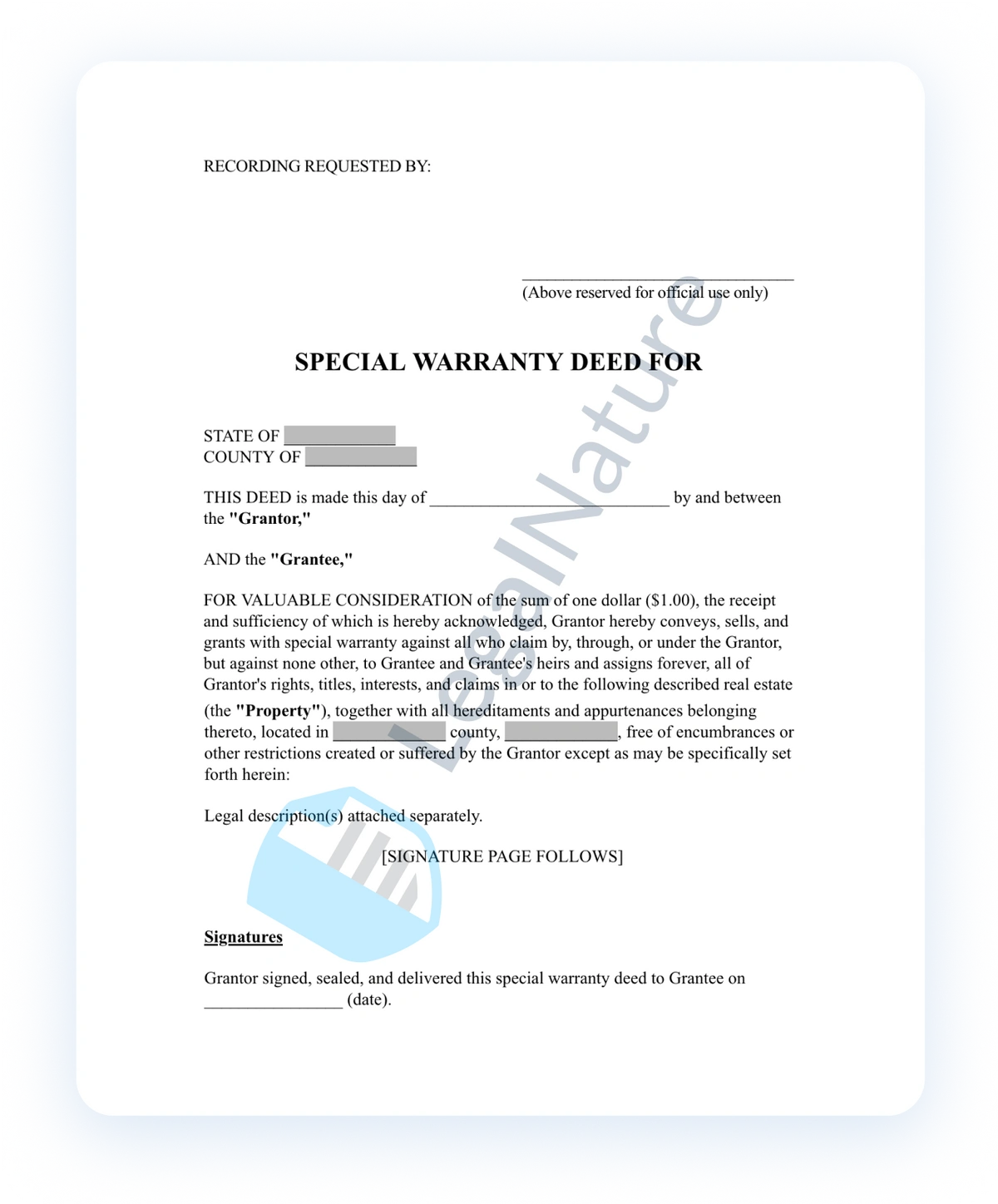
Special Warranty Deed A special warranty deed offers guarantees to the property's title only for the period during which the seller owned the property.
Create a property deed in your state
- Alabama
- Alaska
- Arizona
- Arkansas
- California
- Colorado
- Connecticut
- Delaware
- District of Columbia
- Florida
- Georgia
- Hawaii
- Idaho
- Illinois
- Indiana
- Iowa
- Kansas
- Kentucky
- Louisiana
- Maine
- Maryland
- Massachusetts
- Michigan
- Minnesota
- Mississippi
- Missouri
- Montana
- Nebraska
- Nevada
- New Hampshire
- New Jersey
- New Mexico
- New York
- North Carolina
- North Dakota
- Ohio
- Oklahoma
- Oregon
- Pennsylvania
- Rhode Island
- South Carolina
- South Dakota
- Tennessee
- Texas
- Utah
- Vermont
- Virginia
- Washington
- West Virginia
- Wisconsin
- Wyoming
When to use a property deed
If you want to alter the names on a property's title, you will most likely need to draft up a deed. Since each type of deed has different legal implications, your choice of deed will depend on your specific needs. For example, since a quit claim deed does not provide guarantees against title defects, it tends to be used for specific purposes when the transfer of title needs to be done quickly between parties that know and trust each other.
Quit claim deeds are generally not used for normal sales of real estate between unknown parties. Instead, a general warranty deed or special warranty deed would be used since it would offer the buyer a higher level of reassurance when buying the property.
Steps to create your property deed
Find the Property's Legal Description
You should be able to obtain the legal description of your property from the County Register or Recorder (often online). The legal description of your property may also be found on your land title, tax assessment information, or in your mortgage agreement.
Decide on a Price
In order for a contract to be enforceable, each party must give something of value. If the buyer (i.e. the grantee) is receiving a property for free, the deed will say that the seller (i.e. the grantor) received one dollar ($1.00). In contract law, this is known as giving "nominal consideration."
Complete Our Intuitive Form Online
Fill out our intuitive and state-specific form to create a legally sufficient property deed to meet your needs.
Sign Your Property Deed
In most states, your property deed will be considered effective and executed once it has been both signed by the grantor and also delivered to, and accepted by, the grantee. Some counties require that the grantee sign as well, but most do not.
File Your Property Deed
Although it is not always required, filing your property deed is highly recommended. By recording your completed deed as soon as possible, you gain legal protection from potential adverse claims by other parties.
Why create a property deed?
Property deeds are created for several important reasons:
-
To legally transfer ownership: A property deed is the official document that transfers ownership of real estate from one party (the grantor) to another (the grantee).
-
To establish proof of ownership: The deed serves as legal evidence of who owns the property, which is crucial for resolving ownership disputes and protecting the owner's rights.
-
To provide legal protection: Deeds offer essential legal protection by documenting the lawful ownership transfer and creating a public record that supports title claims.
-
To define property details: Deeds contain important information about the property, including its legal description, location, and any restrictions or encumbrances.
-
To facilitate property transactions: Deeds are necessary for various real estate activities, including selling the property, obtaining a mortgage, or accessing certain government programs.
-
To ensure clear title: Some types of deeds, like warranty deeds, provide guarantees about the property's title, ensuring that the buyer receives the property free from undisclosed liens or claims.
-
To create a public record: Recording the deed with the local government creates an official public record of the property's ownership history.
By creating and properly recording a property deed, owners establish their legal rights to the property, protect their interests, and facilitate future transactions involving the real estate.

Why choose LegalNature?
The professionals at LegalNature offer the expertise and guidance to navigate the nuances of creating a property deed across all 50 states. LegalNature offers a 30-day money-back guarantee. If you're not happy, then we’re not happy. Give us a call and let us help.
Property deed guide
Property deeds are useful for quickly and easily transferring title to real estate to a new owner. LegalNature's property deed form allows you to draft the right deed for your needs.
Number of Grantors and Grantees
Remember, the grantor is the party that owns the property and is selling or transferring it to the grantee, or buyer. Grantors and grantees may be either individuals or business entities.
Grantor and Grantee Types
You will need to specify whether each grantor and grantee is a married individual, a non-married individual, a trustee, or a business.
If a party is receiving the property as a trustee, then the trustee should be named as the grantee, not the trust itself. The deed will state that the trustee is receiving the property on behalf of the trust. If there are multiple co-trustees, you may list the name of any one of the trustees.
If a business is receiving the property, then you will name the business as the grantee and enter the name of the agent who will sign on behalf of the business. The agent should be someone with proper authority to sign binding contracts on the behalf of the business, such as an owner, executive, or manager.
Grantee Ownership Type – Sole Owner or Co-Owner?
You will be asked whether the grantee or grantees are receiving title as sole owners or co-owners. You should select "Sole owner" only if no other person will share ownership with the grantee after the deed is signed. Select "Co-owner" if more than one person or business will share ownership of the property with the grantee after the deed is signed. This would be the case, for example, if the grantor is a tenant in common and is transferring his or her interest to the grantee. The other tenants in common would not necessarily join in the deed as grantors, since only the grantor is changing his or her interest.
Grantee's Property Interest
Here you should indicate what type of joint property interest the grantees are receiving. Depending on your state, you can choose between a tenancy in common, a joint tenancy, a tenancy by the entirety or community property interest, and a partnership.
Tenancy in Common
A tenancy in common is a joint property interest in which each tenant (property owner) owns an undivided share in the whole property. Each tenant may transfer his or her interest without the need for the other tenants to join in the deed. When a tenant dies, his or her share passes according to their will or under state intestacy law when no will exists. Multiple businesses sharing ownership often choose to own as tenants in common due to the simplicity and flexibility of these ownership interests.
Joint Tenancy
A joint tenancy is the same but with a few important differences. First, each tenant owns an equal interest. So if there are four joint tenants, then each has a 1/4 ownership interest in the property. Also, a joint tenant may not sell or transfer his or her interest without the consent of the other tenants. This means that all joint tenants must sign as grantors when transferring or changing ownership and must sign together as grantees when receiving ownership. Lastly, each tenant has the right of survivorship, so when a joint tenant dies, his or her interest automatically passes to the other joint tenants in equal shares.
Tenancy by the Entirety
Tenancy by the entirety and community property interests are basically identical in nature and only differ in name. They are both similar to a joint tenancy but are for married couples. The same rules apply, including right of survivorship.
Final Steps
Remember to record your deed with your local land title office, usually known as the County Recorder’s Office or County Clerk’s Office. Each county has its own unique filing requirements. Therefore, we recommend contacting your office by phone or email in order to verify that you have met their requirements.
- Be sure not to write in the margins of the pages of your deed, as your office may need to write in these. Most counties want at least a three-inch margin at the top of the first page for official use, often to stamp the date recorded.
- Do not staple the pages of your deed together.
- All signatures on the document must be originals—not copied, printed, or stamped.
Create your property deed in minutes
Complete our form
Preview and download your document
Review and sign your document